B2B Design retainers for happier teams

Outsourced design production across whitepapers, presentations, social, animation, brand and digital, without adding headcount
problems we solve

continuity
Repeated scoping, onboarding and approvals slow momentum and reset context each time, making sustained production harder than it needs to be.

internal capacity
Senior marketers and in-house teams don't always have the bandwidth or specialist design expertise required for sustained content production.

hiring commitments
A retainer provides immediate, structured production capacity without recruitment cycles, onboarding, or long-term employment commitments.
our Design retainer tiers

Rolling monthly
Monthly Support, Minimal Commitment
One calendar month’s notice
Three months minimum term
Minimum two days per month

Six-month fixed term
Sustained Support for Busy Marketing Teams
5% discount
Rate locked for full term
Minimum two days per month

Twelve-month fixed term
Brand Partners for Long-Term Support
Month twelve free
Rate locked for full term
Minimum two days per month
Our team has worked with

brand support from a-z
brilliant brand assets, from whitepapers to digital experience

Whitepapers
Clear, authoritative editorial design that gives complex thinking structure, credibility, and room to breathe.

Reports
Designed to support complex thinking, giving ideas the structure and confidence they need to be clearly understood.

Presentations
Powerpoint & Google Slides that help ideas land consistently across rooms, teams and screens.

Product Guides
Clear, practical guide design that supports education and conversion across web, print, and presentation.

Social ads
Campaign creative designed to drive clicks, leads, and conversions across platforms and formats.

Product explainers
2D & 3D animated video explainers that help people quickly grasp how your product works and why it’s valuable.

Data Visualisation
On-brand charts and diagrams that present complex information clearly and credibly to B2B audiences.

Illustration
Custom illustration systems designed to support content, add clarity, and scale across digital and editorial formats.

event design
Distinctive event environments and assets that carry the brand confidently into physical spaces.

Product Experience
We help B2B teams build scalable product design sytems for engaging, and consistently on-brand product experiences.

Brand definition
We help with maintaining brand codes, with support in identifying strengths and inconsistencies, and helping turn up with intention.

Motion Design
Short and long-form 2D and 3D animations that express your brand with character, and earn attention.

getting to know you
With defined capacity reserved each month, plus weekly briefing and check-ins, we actively help you establish and maintain brand codes, so output stays consistent and aligned for the long-term. You're free to move between formats as priorities shift, without being limited by scheduling, bandwidth, or skills gaps.

start the conversation
More Expertise
From presentation decks to design & build, OtherFolk® helps B2B brands turn up with intention.

Our expertise
Branded Content for Curious Minds
A dedicated design and content production partner for B2B marketing teams, across whitepapers, animation, brand and digital, without adding headcount.

Our expertise
Brand Identities to Believe In
A great brand identity connects with its audience. We craft and codify B2B brands to ensure they win hearts and minds, wherever they're found.
Our expertise
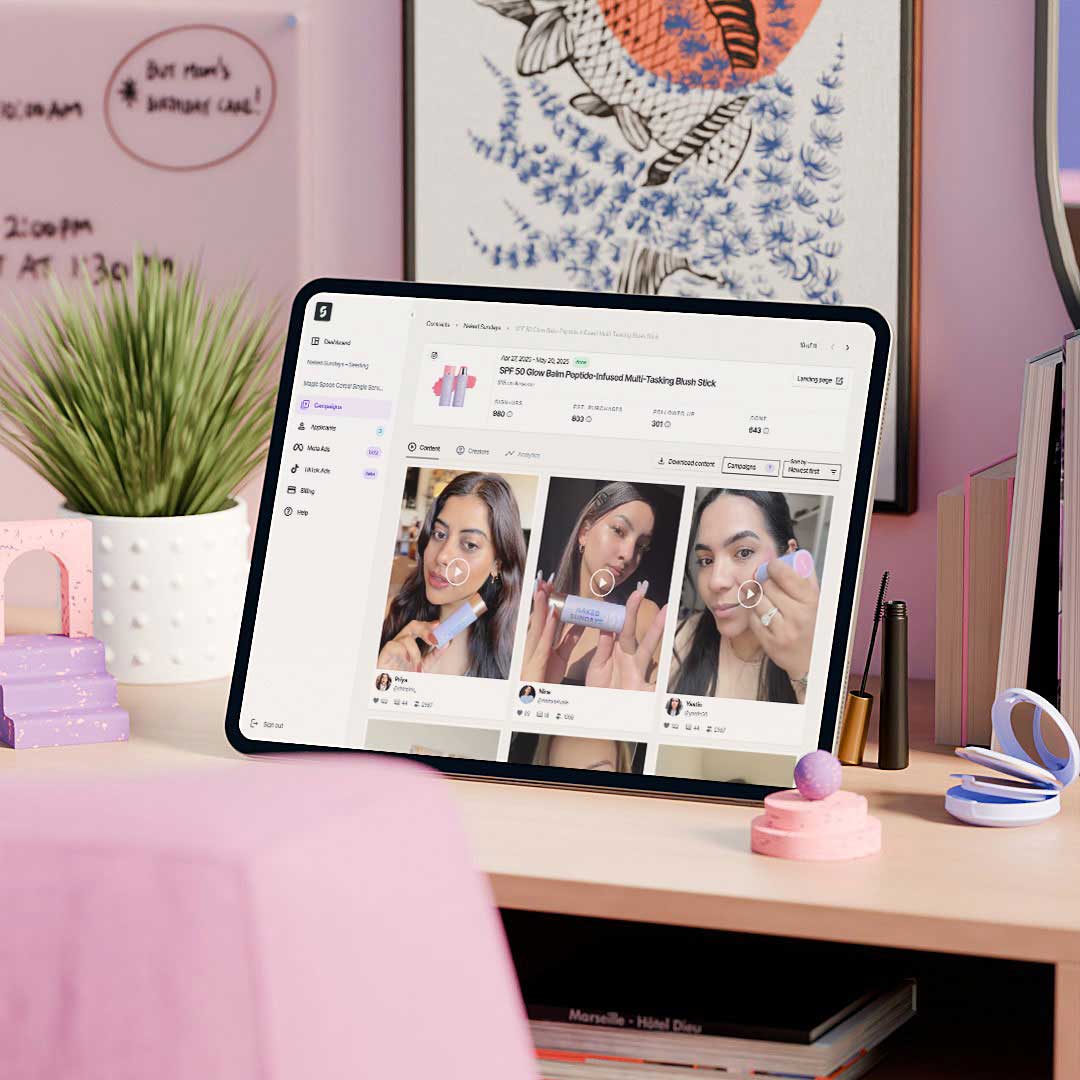
Webflow Websites Built for Growth
Whether it’s simplifying complex buyer journeys or integrating powerful CMS tools, we design and build high-performance B2B websites that connect, convert, and scale with your business.

The Importance of Creating Content for Long B2B Sales Cycles
Most B2B decisions take months, not moments. Marketing content needs to work across a long sales cycle.
In B2B, the final decision usually sits with a CMO or CTO. Of course, everyone knows that. What matters more though, is that they are almost never the first person engaging with you. They are not the ones booking the demo. They're not the ones reading your site in detail. And they're absolutely not the one comparing options side by side for days, weeks, or months. That work happens earlier, inside their team, exploring the market and narrowing things down. A shortlist is formed before leadership is involved at all, and so by the time a decision maker sees you, the shape of the decision has already been set.
Marketing as internal sales enablement
Although the people doing the early evaluation are not the buyer, they do control access to the buyer. They decide what gets discussed internally and how it is framed. So when they bring an option forward, they are the ones explaining what it is, why it is relevant, and how it compares to alternatives.
In effect, they are your internal sales advocate.
It is not just about attracting interest or signalling credibility. It's about supporting internal conversations you will never hear.
This shifts how B2B marketing should be thought about. It is not just about attracting interest or signalling credibility. It's about supporting internal conversations you will never hear. The job is to give teams enough to work with so they can explain you accurately, and move you forward without loss in translation.
That does not require cleverness or heavy messaging, but being conscious of how your story will travel when you are not there to tell it. What can be easily picked up and passed on is what survives the process.
Long B2B sales cycles are shaped upstream. If your marketing helps teams do the early selling for you, you are far more likely to be the option that reaches the decision maker in the first place.
What's a Brand Sprint Workshop?
How we put the whole team on the same page before brand development begins.
Great branding can only be built on strategic clarity: knowing why you exist, who you are for, and how you want to show up. That clarity cannot be left to find it's own way – it has to be built top-down, with intention. Brand sprint workshops create a space where all stakeholders are present, and the big questions get answered in real time. Often for the first time, people hear each other’s perspectives – friction can often be part of the process – debate hard truths, and resolve the differences that would otherwise resurface later. Clarity and team alignment is key, and for that reason it's how we start all our branding work at Otherfolk®.
When you're appointing stakeholders, be clear on exactly why they're there beyond an additional opinion, and what unique view they bring to the table.
Who Needs to Be There?
Your agency/studio, and key decision-makers: founders, senior leadership, marketing leads, and anyone else with a stake in the brand. If someone is missing, decisions made in the sprint risk being undone once they weigh in. That said, it's important to keep the stakeholder group small – like any project, too many voices risk pulling the project apart, and creating more noise than neccesary. So when you're appointing stakeholders, be clear on exactly why they're there beyond an additional opinion, and what unique view they bring to the table. Attendance is non-negotiable for this group – it only works if the people who will see the project through is present to avoid suprises later on. Also: no devices, no distractions.
What Happens in a Brand Sprint Workshop?
The workshop runs through a series of structured exercises over the course of approximately three hours (with breaks). Each exercise exists for a reason:
- The Five-Year Roadmap: This forces the team to think beyond today’s targets. Where does the brand need to be in two, three, or five years? What needs to be true in order for those targets to be met? Is it the same brand, products, or something different? This exercise sets ambition and ensures the brand is built with the future in mind, not just the present quarter.
- Why / What / How: Starting with why you exist as a business defines the brand’s reason to exist beyond revenue. What problem are you here to solve for your customers? What impact do you want to have? What do you offer? How is that delivered? Are these clear and differential?
- Values: Every brand claims to have values. A brand sprint cuts the list down to the three that genuinely guide behaviour. This makes them usable in practice, rather than wallpaper.
- Audiences: You can't be everything to everyone. This exercise forces prioritisation. Who are the three groups that matter most? Decisions get sharper when you are clear who you are talking to.
- Personality: Is the brand playful or serious? Modern or classic? Bold or understated? These simple scales spark debate and create agreement on tone and style.
- Competitive Landscape: By mapping competitors, you see not just who you are up against but also where the gaps are. It is a visual way to decide where your brand should sit, and where it shouldn't.
Each exercise pushes the team to make choices, often tough ones. The point is not to avoid disagreement but to use it productively.
Summary
A brand sprint is three hours of focus that can save three months of drift. It gives you clarity, direction, and alignment, and it does it in a way that energises teams rather than drains them. The outcome is a clear foundation for brand development, websites, and content that everyone has a hand in shaping. If you're kicking off brand work, there is no better way to start.