
Our team has worked with
UX Design & Development
Webflow Is Our Preferred Platform Due to Its Flexibility, Integrations, and Low-Code Builds
Reasons to ❤️ webflow

Faster Development Time
Webflow consolidates design, build and CMS integration into one platform, speeding up timelines for design, development and continuous updates.

built for marketers
Marketing teams can spin up new campaign landing pages using predefined layouts and components, without additional development or support.

Built-in SEO
Webflow offers built-in SEO tools and auditing for optimising every page and asset, ensuring high search visibility and easy customisation.

Scalable by Design
Webflow allow us to create a library of components, so modules stay structurally consistent, while content and ordering is defined page by page.

on-page editing
While a CMS can be added for content such as blogs or case studies, all static content on Webflow sites can be easily updated via a front-end editor.

Responsive Framework
Automatically adjusts layouts and interactions across multiple breakpoints to ensure your site looks perfect on any device.

Motion performance
Motion design features are built in to create performance-safe animations that guide attention, without relying on heavy scripts that slow sites down.

Enterprise-grade security
Built-in DDoS protection, a managed firewall, and automatic SSL keep your site secure and resilient, without servers or security maintenance for your team.

Reliable uptime
Integrated and globally distributed hosting keeps sites fast, stable, and available, even during traffic spikes, without ongoing infrastructure management.
Built for growth
We design sites as systems, not one-off pages. Using reusable components means every part of the site is consistent by default, easy to update, and built to scale as your business grows.
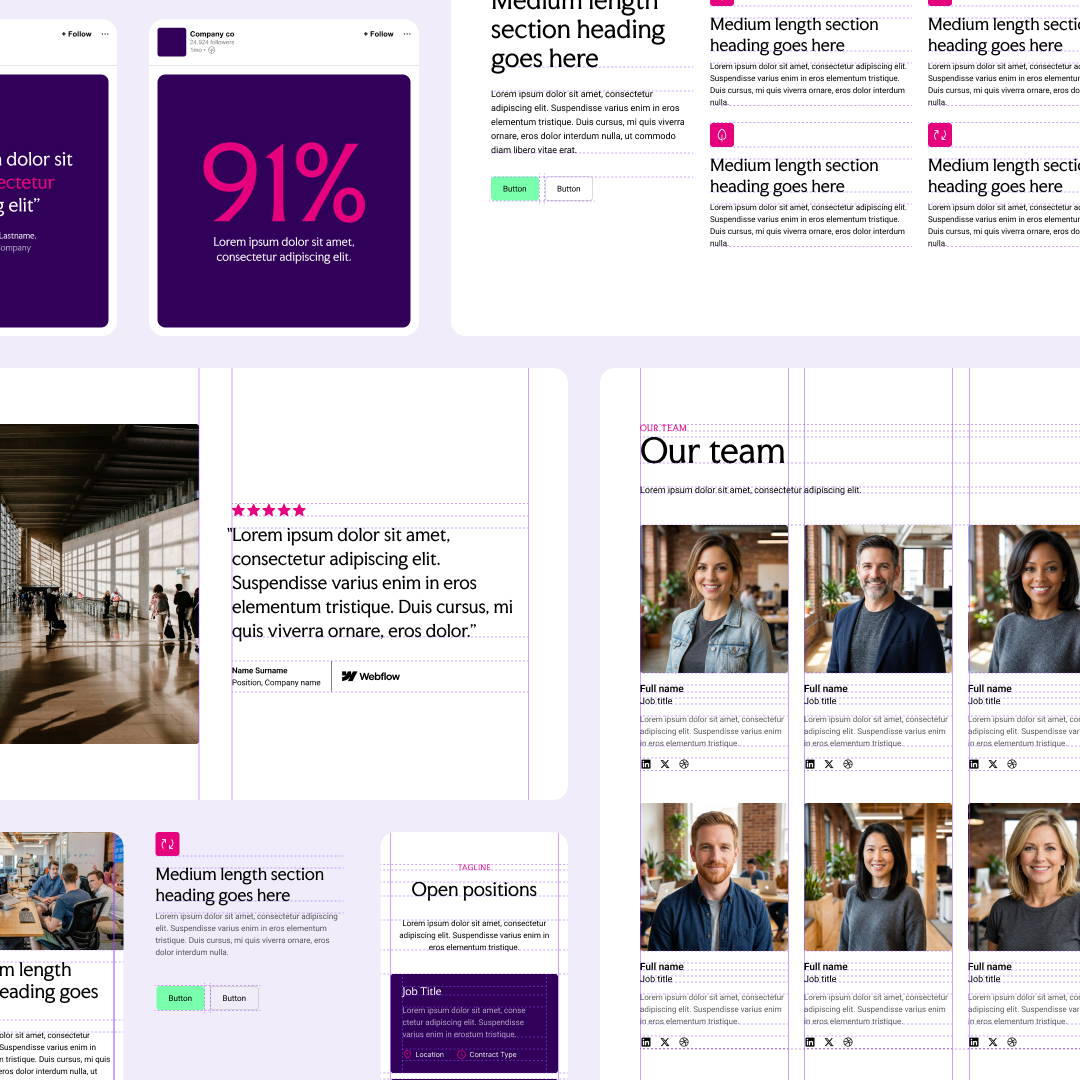
Studies suggest buyers form an opinion about a website in 0.05 seconds. Let's make that count.

Ready to deliver
Everything you need to design, build & grow a website with Webflow

website design
Webflow websites that present your brand clearly, build credibility quickly, and support how your business actually sells.
campaign landing pages
Pages designed to support your campaign with information, reassurance, and actions your prospects need.

microsites
Designed for propositions that need focus, depth and authority, without compromise.

Illustration
Custom illustration systems that add clarity, character, and flexibility across digital and editorial content.

Data Visualisation
Clear, structured visuals that turn complex data into something readable, credible, and easy to understand.

Product Explainers
2D & 3D animated explainers that help people quickly grasp how your product works and why it’s valuable.

3D design
High-end visuals, technical product imagery, and complex concepts, when 2D illustration isn’t enough.

photography
Staff portraits, workplace and culture photography that presents people and spaces at their best.
motion design
Micro-interactions and transitions for a high-end experience without compromising performance.

Our UX design & development Process

working with us

Monthly Retainer
Ideal for clients seeking ongoing support for three months or more, a monthly retainer gives you consistent access to our expertise across B2B content, branding, and digital. We'll work closely with your team to keep projects moving, and help tackle design needs as they come up.

Project-based
Perfect for clearly defined goals with a set timeline, our project-based approach ensures we deliver impactful results tailored to your unique needs. Whether it's a complete brand overhaul, a digital experience, or explainer video, we’ll scope out every detail together before getting started.
Our clients say
"Every part of our process working with OtherFolk® has been seamless, from setting expectations, implementation, communication, and exceptional support. I cannot speak more highly of their work ethic and design output"

get started
Book a 15-minute chat with us to share your project, hear our initial thoughts, and decide if we’re a team you’ll (really) enjoy working with.
Alternatively, drop a note to hello@otherfolk.studio
Alternatively, get in touch at hello@otherfolk.studio